
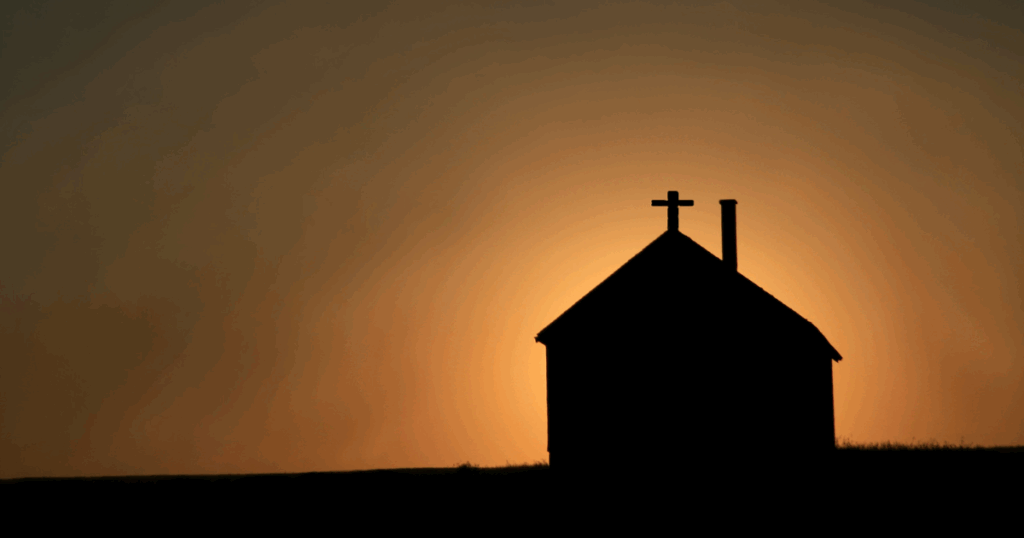
When Church Hurts: Why So Many Are Rethinking Their Faith (and Not Wrong To)
You don’t stop being the Church just because you stop going to one.
For many, church is no longer a sanctuary. It’s become a place of pressure, judgment, or even deep emotional pain. It’s no wonder that so many are leaving—not because they’ve abandoned Jesus, but because they’re trying to find Him again… outside the noise.
Rethinking faith is not rebellion—it’s often a holy unraveling to restructure what is eternally true and of God. It’s the soul refusing to settle for a version of God that doesn’t look like Jesus. And if that’s where you find yourself, you’re not alone. You’re not broken. You may actually be waking up.
Jesus didn’t say, “Come to church and I’ll fix you.” He said:
Come to Me, all who are weary and burdened, and I will give you rest. – Matthew 11:28 (NIV)
He spoke of rest—not religious performance. Restoration—not pressure to conform.
If what you experienced in “church” left you burdened rather than freed, that’s not on you. That’s a system misrepresenting the Savior. It’s time to reimagine what Jesus meant when He called us His Body.
More Than a Building: Rediscovering What Church Actually Is
Let’s get back to the roots. The word “church” in the Bible is “ekklesia” — meaning the “called out ones.” Not an institution. Not a Sunday event. A people. A family. A living Body.
In Acts 2, we see a grace-filled community marked by love, generosity, and shared life:
They devoted themselves to the apostles’ teaching and to fellowship… They broke bread in their homes and ate together with glad and sincere hearts. – Acts 2:42, 46 (NIV)
There were no fog machines, no big stages—just people fully present, known, and loved. That’s the essence of church.
The real church is:
- Where you can bring your doubts and not be shamed.
- Where grace trumps performance.
- Where there is guidance without control
- Where true identity is affirmed, not crushed.
Church was always meant to be a healing community, not a house of judgment. A sanctuary of safety where wounded souls find grace, not shame.
Let this truth sink in: You are still the Church—even if you’re healing outside of one.

When Dogma Replaces Love: Recognizing Spiritual Abuse and Toxic Religion
It’s not always obvious when religion becomes toxic—because it often comes dressed in spiritual language and good intentions. But here’s the red flag: when rules replace relationship, when fear silences freedom, and when control masquerades as “God’s order,” something has gone deeply wrong.
Spiritual abuse happens when leaders use their position to dominate rather than empower. When people are shamed into obedience rather than drawn into love. When questioning is labeled as rebellion, and conformity is mistaken for holiness.
Let’s be clear: grace doesn’t demand that you fit a mold—it invites you to be made whole.
By this everyone will know that you are my disciples, if you love one another. – John 13:35 (NIV)
Jesus never weaponized scripture to silence people. He never demanded uniformity. He embraced the marginalized, questioned the religious elite, and made room at the table for the “wrong” people.
If you’ve been silenced, shamed, or spiritually manipulated, you are not alone. And you are not crazy.
For a deeper dive, you can explore my blog: Freedom from Spiritual Abuse & Controlling Leaders
Love sets free. Legalism controls.
Grace empowers. Religion shames.
And Jesus? He’s still flipping tables when He sees the law of Love replaced with the law of Moses.
Jesus Never Modeled Religion—He Modeled Radical Inclusion
When we look at Jesus, we don’t see a man obsessed with religious correctness. We see a Savior who broke the rules of exclusion to welcome the rejected.
- He dined with tax collectors (Luke 5:29–32).
- He defended the woman caught in adultery (John 8:1–11), while empowering freedom from fallen ways of being.
- He healed on the Sabbath, not to provoke, but to reveal the heart of God.
It is not the healthy who need a doctor, but the sick. I have not come to call the righteous, but sinners to repentance. – Luke 5:31–32 (NIV)
Jesus didn’t establish a religion—He revealed a Father.
When religion said, “You don’t belong,” Jesus said, “Follow Me.”
When the crowd picked up stones, Jesus knelt in the dirt.
When culture canceled people, Jesus restored them.
The radical love of Jesus scandalized the religious spirit then—and still does now.
Finding Healing From Religious Trauma: Identity, Grace & Safe Community
Healing after church hurt doesn’t mean throwing out your faith. It means separating Jesus from what distorted Him.
That takes time. It takes brave honesty. And it takes grace. But you’re not starting over—you’re stepping into something real.
The first step? Rediscover God as He truly is—revealed in Jesus.
Whoever has seen Me has seen the Father. – John 14:9 (NRSVUE)
This is the God Who:
- Calls you child before you call Him Lord.
- Invites questions and emotions, not just obedience.
- Who forgives sin, and empowers freedom from it out of Love.
- Doesn’t punish your pain—He enters it.
Rebuilding trust also means finding (or creating) safe, grace-based community. Not perfect community, but one marked by humility, empathy, and shared pursuit of Love. You don’t have to agree on everything to walk together.
(Want a practical resource? Check out: How to Disagree Well —a guide for navigating differences with love and maturity.)
Healing happens in community. Not the kind that pressures or demands performance—but the kind that reflects Christ in action: loving, listening, and lifting one another up.
A Church Without Religion: What Love-Led Community Can Look Like
Imagine a church that…
- Welcomes the questions and celebrates the journey
- Honors diversity instead of demanding uniformity
- Celebrates authenticity, while creating an environment to heal and grow together
- Makes space for grief, doubt, healing, and joy
- Isn’t built on control, but on mutual submission and love
That’s the Church Jesus died to form. Not a building. A Body.
It might meet in homes, online, in coffee shops, or living rooms. It might be messy and unpolished. But it will carry the scent of heaven: grace, truth, and love in action.
Remember, we’re meant to be famous for love—not judgment.
Let’s become that kind of Church again.
And if you’re wondering what this looks like practically, read:
👉 Love in Action: 6 Practical Ways to Express God’s Love Today
Love is not just theology. It’s a lifestyle. It’s Church reimagined.

You Are the Church—Heal, Reclaim, Reimagine
You don’t need permission to walk away from what hurt you.
You have permission to heal. To hope. To rebuild your faith in a way that reflects the heart of Jesus.
Here’s your invitation:
- Heal at your own pace—with God as your safe place.
- Let Holy Spirit rewrite what “church” means to you.
- Open up to at least one mature, safe person to help you in your journey of healing and growth
- Join or form communities that feel like family, not performance.
You are not disqualified from being the Church. You are it.
God’s not rebuilding your old foundation. He’s laying a new one—in grace, in freedom, and in true identity.
Let’s reimagine Church together.
Love, Catherine Toon
If you’re craving a deeper rest, not just from religion but from striving altogether, don’t miss this resource:
👉 6 Powerful Shifts to Start Living From a Place of Rest
Thank you for this bold and tender work. Your article addresses the pain many carry from toxic religious systems and then invites a vision of church as healing, belonging, and freedom. I appreciate how you don’t gloss over the damage—shame, performance, and control—but instead offer ways forward: community, authenticity, relational trust, and reform. This is not just critique but hope for renewal. Your voice reminds us that church isn’t simply attendance or tradition—it can be a place where we are known, healed, and beloved. Thank you for writing this.
I am so thrilled that the article blessed you! Such a huge issue. Thank you so much for your kind words – so good to hear from you!